Content on this page may include affiliate links. If you click and sign up/place a wager, we may receive compensation at no cost to you.
Blackjack Strategy: How to win in blackjack, best bets, tips, basic blackjack strategies
Learn important details about basic blackjack strategy, which U.S. casino apps are best for strategic players, the intricacies of card counting, and why online casinos have the advantage over Vegas.
Forming a smart blackjack strategy is one of the best ways to set yourself up for success when gambling at legal U.S. online casinos in states like Michigan, New Jersey, Pennsylvania, and West Virginia.
In this guide, I'll explain how to execute basic blackjack strategy, where to find the most favorable rules, how card counting works, and discuss why strategy works better online versus in Vegas casinos.
What is blackjack strategy? Why does it matter online?
Blackjack strategy is a set of decisions used to maximize a player's chances of winning. It requires knowing when to hit, stand, double down, or split based on the situation. If the player has a 15 versus the dealer's 5, for example, the optimal decision is to stand.
The game's strategy essentially breaks down into two camps: basic and advanced (e.g., card counting). Basic strategy is what the vast majority of players use because it's the most practical for non-professionals. It won't overcome the house edge, but it can greatly reduce the casino's advantage when done properly.
Strategy matters just as much at online casinos as it does on physical tables. Every decision affects the house edge, from knowing when to hit or split pairs. Online players who thoroughly understand proper strategies and blackjack odds are in a much better position to win compared to those who don't.
Basic strategy vs. guessing: the house edge difference
Many casual players make decisions based on guesses or hunches. This might seem fine to those learning how to play 21, but it leads to costly mistakes that significantly increase the house edge.
A player who masters basic blackjack strategy can reduce the casino's advantage somewhere between 0.3% and 0.7%, depending on the variation and table rules. Those who play solely based on intuition face a house advantage between 2.5 and 5%.
That means the total difference in house edge between playing with a strategy versus guessing is roughly 2.2% to 4.3%. Let's put this into mathematical perspective:
A player wagers $1,000 while using good blackjack strategy.
They're facing a 0.5% house edge.
1,000 x 0.005 = $5 in expected losses
Another player bets $1,000 while relying on hunches.
They're facing a 4% house advantage.
1,000 x 0.04 = $40 in expected losses
40 - 5 = $35 difference between strategic play and guesswork
Keep in mind that this scenario only accounts for $1,000 in wagers. For those who play online and/or live blackjack regularly, this difference could add up to thousands of dollars over time.
Does basic strategy work in online blackjack?
Basic strategy does work in online blackjack because it's based on proven decisions that lower the house edge, not on the setting where the cards are dealt.
The same principles apply whether you're playing a software-based blackjack game, at a streamed live dealer table, or in a land-based casino. For example, splitting aces is an optimal decision whether one is using a US casino app or sitting at a physical blackjack table.
One thing to note is that there can be slight rule variations between different online, live dealer, and brick-and-mortar blackjack games. For instance, online tables are more likely to pay 3:2 for natural blackjacks, whereas some land-based tables only pay 6:5.
Situations like these may call for slight differences in optimal blackjack strategy. The same applies to other online casino games, including developing a craps strategy. But the key point is that strategy is important regardless of where the game is played.
Top blackjack strategy casinos for real money in September 2026
Plenty of legal U.S. casino apps offer quality blackjack games where strategy makes a difference. However, some operators stand out due to their high-paying games, impressive live dealer tables, or other aspects. Here are the best online casinos where we've played blackjack, with each site excelling in a certain area.
Play Gun Lake Casino: best overall for basic strategy players
We like Play Gun Lake because it offers several games with low house edges that make using basic strategy worthwhile. Here are examples:
Player's Choice: 0.32% house edge
Xchange: 0.32%
Play Gun Lake Blackjack: 0.34%
Cashback Blackjack: 0.45%
These are some of the industry's best online blackjack games as far as odds go. Any player who masters the strategy for these variations will be rewarded with a low house advantage.
The one catch is that Play Gun Lake Casino is only available in Michigan right now. But any blackjack player who lives in or near the Wolverine State should take advantage of the high-paying games here.
BetMGM is one of the largest online casinos in regulated iGaming states like Michigan, New Jersey, Pennsylvania, and West Virginia. Unsurprisingly, it features one of the best varieties of live dealer blackjack games in the US.
Some live variations that BetMGM offers in states it serves include Speed Blackjack, BetMGM Bet Stacker Live, Lightning Blackjack, and Borgata Blackjack Live.
Besides sheer variety, this casino relies on Evolution to supply its live blackjack games. Evolution is widely considered the gold standard among U.S. casino apps for streaming quality, personable dealers, and unique live games.
bet365 Casino: best for sports bettors crossing into blackjack
Any sports bettors learning how to play blackjack will feel comfortable making this switch at bet365 Casino.
First, bet365 integrates blackjack games, sports betting, account management, and banking on the same app. This makes it easy to quickly switch from the sportsbook to blackjack tables, make deposits and request withdrawals.
bet365 also offers classic and single-hand games that are easy for beginners to navigate in terms of blackjack rules and strategy. Those who want more challenges will find several live dealer variations, like Football, Easy, and Lightning Blackjack.
DraftKings Casino: best for high-limit blackjack strategy play
DraftKings is a good all-around blackjack casino due to its game variety and frequent promotions. But high-limit tables are the area where it truly excels.
Here are some of the DraftKings games with high maximum bets:
DraftKings Multihand Blackjack: $42,000 max
Four 20s Blackjack: $15,000 max
Basketball Blackjack: $10,000 max
DraftKings All Bets Blackjack: $10,000 max
DraftKings Blackjack: $10,000 max
Touchdown Blackjack: $10,000 max
Blackjack Singlehand Poker & Pairs: $6,000 max
Power Blackjack: $5,000 max
Infinite Blackjack: $5,000 max
With several variations offering between $5,000 and $10,000 maximum wagers, this casino is great for anyone wishing to combine high stakes with strategic play.
While smart blackjack strategy pays off, it's complex because every decision impacts the house advantage. Contrast this to something simpler, like roulette strategy, where making optimal decisions is easier.
Luckily, a blackjack strategy chart simplifies the matter. It lays out when to hit, stand, double down, or split based on your score total and the dealer's up card. It's essentially like a blackjack cheat sheet for how to make the correct decision in every situation.
By referring to a blackjack basic strategy chart, you can make the right play every time and keep the house edge to a minimum. You'll eventually start memorizing optimal decisions, allowing you to play online or live without needing much aid from a blackjack chart.
Hard hands: When to hit, stand, or double down
Most blackjack hands are hard hands, meaning they don't contain a "soft ace" that counts as 1 to avoid busting. Examples include a hard 17 (e.g., 10-7), hard 14 (e.g., 8-6), and hard 12 (e.g., 9-3).
Basic strategy for blackjack hard hands mainly revolves around the dealer's chances of busting. A dealer upcard ranging from 2 through 6 is considered weak and allows you to stand on a wider range of hands.
Even with a hard 12, for example, standing against a 6 dealer upcard is the correct decision. The dealer has a much higher chance of busting since they must hit until getting a hard 17 or a soft 17, depending on the table rules.
Navigating hard hands can be difficult without any help. It's easy to fall into the trap of standing on a hand where one should be looking to improve their score (e.g., 16 vs. dealer 8).
Likewise, too many players hit with a low hard total like 12 or 13 without considering the dealer's visible card. A blackjack strategy chart helps immensely in knowing exactly how to deal with hard hands.
Hard 16 vs. dealer 10: The most misplayed hand in blackjack
Many players who ignore blackjack strategy stand on a hard 16 vs. a 10 dealer upcard. Their reasoning is simple: they'll bust when drawing anything over a 5, so it's better to play it safe.
However, this is the wrong move based on the dealer's card strength. The dealer has good odds of drawing a 7 or better, reaching their hard/soft 17 requirement, and beating a 16.
The best option in this situation is to surrender if the rule is available. Assuming surrender isn't an option, the optimal move is to hit despite higher odds of busting, as it will almost always be necessary to improve on 16 for any chance of winning, anyway.
Soft hands: How an Ace changes your decision
A soft hand contains an ace that can count as 1, in case 11 would lead to busting. Examples include a soft 19 (A-8), soft 17 (A-6), and soft 14 (A-3).
These hands provide flexibility because you can't bust on the next drawn card. For example, drawing a 10 with a soft 17 would lead to the same score total (A-10-6).
Due to this extra insurance, a blackjack strategy chart provides different recommendations for playing soft vs. hard hands. For instance, a hard 17 vs. a 6 dealer upcard calls for standing. A soft 17 vs. the same upcard calls for doubling down because of the safety net a soft hand provides.
When to double down, and when the chart says no
Doubling down involves more risk because you're doubling the initial bet while only receiving one extra card. So, it's important to be selective when making this decision.
Basic strategy on a blackjack chart shows that most double-down opportunities arise when your score is 10 or 11. You should almost always double with an 11, except when the dealer shows an ace. Meanwhile, doubling with 10 vs. dealer upcards of 2–9 is optimal.
There are also opportunities to double down with a score of 9 and several soft hands. A blackjack chart will help you determine exactly when to double in these situations.
Split pairs: Which pairs always split, which never do
One universal blackjack strategy truth is that you should always split aces and 8s. Splitting aces gives you a chance at two good starting hands. Breaking up 8s is as much about getting away from a hard 16 as it is about forming better hands.
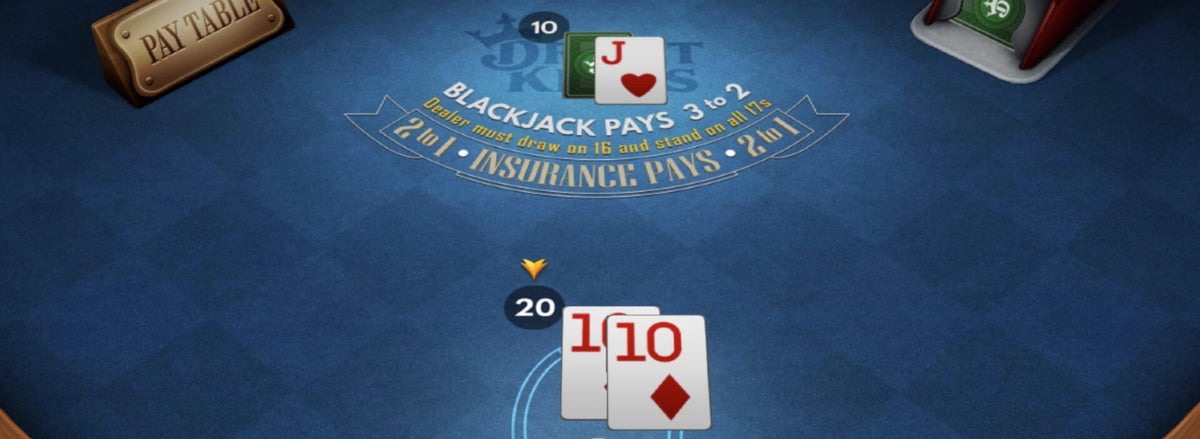
The other concrete rule about blackjack splitting is to never split 10s. The main reason why is that you've already got a great score of 20. Breaking up this hand increases the chances that you'll be dealing with two potentially weaker hands.
Beyond these scenarios, whether you split pairs depends entirely on the situation. A chart will show when you hit, stand, split, or double down with a pair.
Surrender: The underused rule that saves your bankroll
The surrender rule isn't available at every land-based or online blackjack table. But when it is, surrender plays an important part in basic blackjack strategy.
This rule requires giving up half your bet in exchange for getting out of the hand. It's a small price to pay to avoid unfavorable situations that almost always result in losses. For example, having a 16 vs. 9 dealer upcard is a great chance to bow out.
If the surrender rule is in play, use a strategy chart to know exactly when giving up half your bet is the right move.
Beyond basic strategy: Card counting and bankroll discipline for online blackjack
For over 99% of players, basic strategy is the way to go. However, some may want to expand their blackjack experience by getting into advanced strategies, namely card counting. Let's discuss how to count cards, why this technique doesn't work online, and how to manage a bankroll like an expert.
Card counting basics: The Hi-Lo system explained
Blackjack is already firmly in the casino games with best odds category due to its low house edge. But card counting can take things to another level by potentially giving you the advantage over the casino.
The first step is to learn a card counting system, or a set process for determining when the count favors you. The Hi-Lo system is considered the best all-around counting strategy since it's user-friendly and offers a solid 0.5% to 1.5% edge over casinos when used correctly.
You use the Hi-Lo by assigning a point value to each card dealt from the shoe. Here are the values:
2 through 6 = +1
7 through 9 = 0 (neutral)
10 through A = -1
The count that you keep is called a "running count." The general idea is to bet more when the running count is negative (e.g., -3) because this is when there are more high cards than low cards. Going further, you have a stronger chance of getting a natural blackjack and of the dealer busting when there are more high cards.
While the running count is a good start, you need to convert it to a "true count" for more accuracy. A true count considers how many decks are in the shoe. You find it by dividing the running count by the estimated number of decks remaining. Here's an example:
Running count = +8
You estimate two decks remain.
8 / 2 = +4 true count
The final step is to increase bet sizes with a positive true count when fewer decks remain (e.g., 2 decks left from an 8-deck shoe). The fewer the decks, the less variance there is when making those big bets.
Dozens of other card counting systems exist, including some that offer even higher than a 1.5% advantage. However, most are considered so complicated that they can't realistically be used in a live casino setting.
After all, you must keep up with the dealer's speed and casino distractions to maintain a proper count. The Hi-Lo system solves these issues by keeping things simple and profitable.
Why card counting is nearly impossible in online RNG blackjack
Card counting only works when there's enough deck penetration, or the depth that you get into the shoe before the dealer shuffles. Even with a +8 count within the first deck of a 6-deck shoe, there are too many cards and too much variance to be confident that bigger bets will pay off.
Most experts contend that 75% to 80% deck penetration is needed to place bigger wagers with confidence later in the shoe. An online blackjack casino doesn't offer nearly enough deck penetration to allow for consistent profits.
Online blackjack games use random number generators (RNGs) to shuffle. Given that gaming sites can instantly shuffle shoes following hands, their games often do exactly this. In many cases, your count never survives past the first hand.
Now, some players point out that a live dealer online casino doesn't shuffle after every hand. Much like land-based casinos, live dealer studios don't want to lose too much time and profits by over-shuffling.
However, they do shuffle enough to prevent effective card counting. Most live casinos I've tried only allow 50% deck penetration or less for a 21-card game.
Bankroll management: Sizing your bets like a sports bettor
Properly managing your bankroll is important any time you play online casino games for real money. But it's especially crucial if you're a serious blackjack player who's hoping to stretch a bankroll as far as possible.
One good approach to blackjack bankroll management comes from sports betting. Many knowledgeable sports bettors break their bankrolls down into 100 units. For example, somebody with a $500 bankroll could break their gambling funds up into 100 units worth $5 apiece.
They'll then size their bets accordingly, never risking more than 1–3 units on a single wager. Here's an example of how this would work in blackjack:
You have a blackjack bankroll of 100 units.
You stick with a standard 1-unit bet under most circumstances.
Depending on how hot you get, wagers could increase to 2 or 3 units.
However, you'd never exceed a 3-unit bet no matter how hot you get.
On a side note, this approach works for other casino table games. For instance, your baccarat strategy might call for a similar bankroll management approach.
Online blackjack strategy vs. playing in Vegas: key differences
While core blackjack strategy remains the same whether playing online or in a Las Vegas casino, the setting can alter how well players are able to execute these strategies. This is why it's important to understand how blackjack return to player (RTP) transparency, demo modes, and bonuses differ between online and land-based settings.
Published RTP: The online transparency advantage
Regulated U.S. online casinos are legally required to publish blackjack RTP somewhere within the game. RTP is important because it indicates how much a game pays back over time. It's simply the reverse of the house edge (e.g., 99.5% RTP = 0.5% house edge).
To see these payout percentages online, you just navigate to a game's info screen. Sometimes you'll need to scroll through the blackjack rules page before finding RTP at the bottom.
In any case, online blackjack games are fully transparent with the odds of winning. You can quickly check the payout percentage and decide if the game is worth playing.
Vegas casinos don't typically publish RTP figures for their blackjack games, especially not on the tables themselves. You'll need to research individual table rules or the given casino's website to estimate the payback figure. This makes it much harder to know when you're playing reasonable games.
Free play mode: Practice basic strategy with zero risk
Players don't have to immediately jump onto online blackjack real money tables. Most legal U.S. online casinos offer free demos for their games.
A demo is perfect for practicing basic blackjack strategy without risking anything. This allows beginners to develop confidence before making real bets. It's also a good way to enjoy blackjack with no stress involved.
There's no comparable option at Vegas casinos. Every hand requires a bet and some level of risk, which makes for a tougher learning environment. These casinos also expect players to maintain a reasonable pace when making decisions to avoid slowing down games.
Welcome bonuses effectively lower your cost per session
One clear advantage that online blackjack offers over Vegas establishments is welcome bonuses. A welcome bonus is available to new players and can be worth hundreds or thousands of dollars. For example, an online casino might offer up to $2,000 in casino credits to first-time depositors.
While welcome offers come with terms and conditions, they're good for lowering the overall cost of playing blackjack. Everything from casino credits to lossback credits (i.e., a loss rebate) returns funds spent wagering on blackjack.
Las Vegas casinos are famous for giving out comps like free drinks, meals, and bottle service. However, new players don't receive any of these rewards immediately after walking through the door. In some cases, they don't get anything beyond a free drink or two if they're not a high-profile player.
Frequently asked questions about blackjack strategy
What is basic blackjack strategy?
Basic blackjack strategy is a set of mathematically proven decisions that lowers the house edge. It tells players when to hit, stand, split, or double down based on their hand and the dealer's up card. It's referred to as a "basic" strategy because it does not provide a potential long-term advantage over the house, unlike card counting.
How does a blackjack strategy chart work?
A blackjack strategy chart shows the optimal decision for any given situation based on the player's score and the dealer's upcard. For example, it shows to stand on 15 when the dealer's upcard is 6. To read a blackjack chart, players simply find the intersection between their hand and the dealer's visible card. This intersection will reveal what action they're supposed to take.
What is the house edge in blackjack with basic strategy?
The blackjack house edge typically drops to between 0.5% and 0.7% when optimal basic strategy is used. However, individual table rules and blackjack variations also affect the house advantage. For example, the basic strategy for classic blackjack is unique from Blackjack Switch and leads to a different house edge.
Does the basic strategy guarantee a win?
No, basic strategy in blackjack doesn't guarantee winnings. It merely improves one's odds of winning in a given session while reducing long-term losses. In the best-case scenario, a player can reduce the blackjack house edge to 0.5% or lower. A 0.5% house advantage would lead to $5 in theoretical losses for every $1,000 wagered (1,000 x 0.005).
When should you split pairs in blackjack?
Whether you split pairs varies based on the hand and dealer upcard. Universal strategy rules include always splitting aces and 8s, while never splitting 10s. Beyond these absolutes, you should consult a blackjack strategy chart to know when to split specific pairs.
When should you double down in blackjack?
Deciding when to double down in blackjack depends on the hand and situation. For example, you should double down with an 11 nearly every time, except when the dealer shows an ace. By contrast, doubling down with a soft 13 (e.g., A-2) should only be done when the dealer's upcard is a 5 or 6.
What is the difference between soft and hard hands?
A soft hand includes an ace that can be worth 1 point instead of 11 to prevent a player from busting. A hard hand doesn't include a soft ace, such as a hard 15 (e.g., 9-6). Blackjack strategy charts treat soft vs hard hands differently in certain situations. Understanding these differences is key to using an optimal strategy.
Is card counting legal in online blackjack?
Yes, card counting is legal in online blackjack, but the problem is that it doesn't work in virtual settings. Players need 75% to 80% deck penetration (the percentage of the shoe that's dealt before shuffling occurs) to earn reliable profits. Most online blackjack games have RNGs that shuffle shoes instantly after every hand, preventing any meaningful deck penetration.
Are blackjack winnings taxed?
Yes, blackjack winnings are taxable, assuming a player has a profitable year. The IRS treats blackjack winnings as taxable income, with rates varying from 10% to 37%. Each state taxes gambling wins differently. Pennsylvania requires a 3.07% flat tax on blackjack profits, for example, while West Virginia has an income-based rate ranging from 2% to 5.98%.
How does blackjack strategy differ between 6-deck and single-deck games?
Blackjack strategy only differs slightly between single-deck and 6-deck games. For example, one small difference involves standing with a soft 18 vs. a 7 dealer upcard at a single-deck table compared to hitting in a 6-deck game.
Players who use the same blackjack strategy in both situations won't miss out on much as far as lowering the house edge. But those who want an optimal strategy should use different charts based on the number of decks.
Our editorial team's selections for "the best blackjack strategies" are based on independent editorial analysis, not on operator payments. We evaluate licensed operators across criteria, including bonus value and transparency, wagering requirements, payout reliability, customer support, and responsible gaming practices. Rankings reflect our team's opinion at the time of review and may be updated periodically.
Bettors must be 21 years or older and otherwise eligible to register and place wagers at online casinos. If you or someone you know has a gambling problem, please seek assistance from trained professionals such as the Problem Gambling Help Network at 1-800-MY-RESET.