Content on this page may include affiliate links. If you click and sign up/place a wager, we may receive compensation at no cost to you.
Doubling down in blackjack: when the math says yes (and when it doesn't)
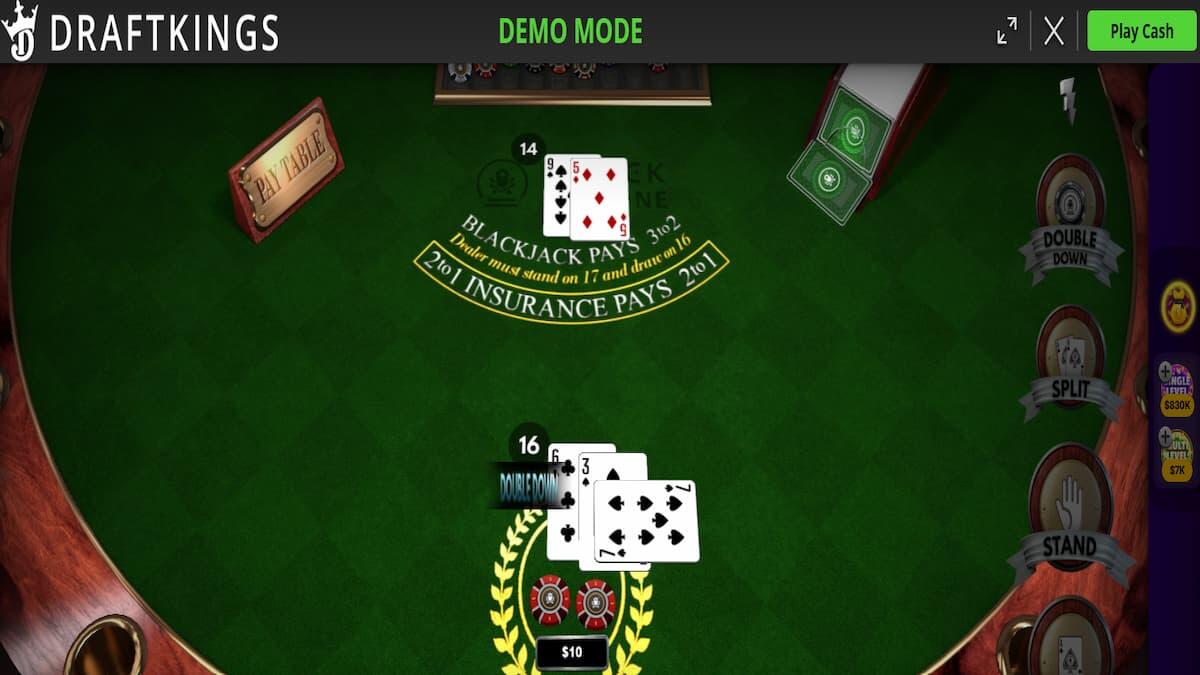
Understanding when to double down is key to maximizing value on good blackjack hands, but it's just as important to know when doubling is a bad decision while you're playing this fall.
Learning when to double down in blackjack comes down to a simple concept: knowing which hand totals justify doubling your original bet and taking just one more card. With standard blackjack strategy, this generally means doubling a hard 9, 10, or 11 against weaker dealer upcards. I'll cover the specifics of when you should double down while playing blackjack this fall.
When to double down according to basic strategy
Blackjack double down rules can vary slightly depending on the exact variation and table rules. However, the core decisions are generally consistent across standard 21 games. Here's how to handle the most important double down scenarios.
Also, before you start playing, check this best online casino to see our top-ranked blackjack operators (hint: they're ranked No. 3 and No. 6 overall).
Hard 11: The auto double down
We'll start with the easiest one here. When you're holding a hard 11, double down against a dealer 2 through 10. This hand has a strong chance of turning into a 21 or at least another high-value hand.
Whether you double against a dealer ace depends on the table rules and involves more intricate strategy. But again, you can automatically double down when facing a 2–10.
This page on the best blackjack odds breaks down why you should double or perform other hand actions based on the dealer's upcard.
Hard 10: A safe double in most situations
A hard 10 presents almost as easy a situation for doubling as a hard 11. In this case, you double against every dealer upcard except a 10 or ace. Any 10-value card boosts your score to a 20, while high cards will also give you a strong total.
You should avoid doubling when the dealer shows a 10 or ace because they now have good odds of forming a great hand, too.
Hard 9: Stick to doubling against a 3-6
While a hard 9 puts you in a good position, it still requires being very selective on double downs. You should only double with a hard 9 when the dealer's upcard is 3, 4, 5, or 6.
The dealer is in a vulnerable position with these cards because they must draw to 17, increasing the chances they bust while trying to reach this total. And while a 9 doesn't guarantee a great hand, it still puts you in a good spot against poor dealer upcards.
Soft hands: A few instances where doubling works
Strong soft hands like A-9, A-8, and A-7 are best suited for splitting. However, some mid-range and even lesser soft hands are good for doubling based on the situation. Here's when you want to double with a soft hand:
A-6: double vs. a dealer 3-6
A-5 and A-4: double vs. a dealer 4-6
A-3 and A-2: double vs. a dealer 5-6
Some land-based and live dealer online casino operators limit situations where you can double down, which affects doubling soft hands. For example, you may only be able to double on 9, 10, or 11, so check a game's rules before playing.
When doubling down is a mistake
Doubling isn't simply a way to boost winnings whenever you have a decent starting hand. It restricts you to one additional card while upping the ante.
That's why doubling against a strong dealer upcard can sometimes be a poor decision. For example, a hard 9 against a dealer hard 9 isn't as favorable as going against a 6.
Certain totals seem fine to double when facing a weaker dealer upcard. For example, a hard 8 versus a dealer 4 may seem like a decent spot. However, the 8 is too weak to justify doubling and only receiving one more card.
Besides understanding when not to double down, it's also important to know which blackjack sites offer the most value in terms of bonuses and game selection. Our online blackjack real money page covers which casinos feature the most variants, largest bonuses, and fastest payouts.
Bottom line at the table
The easiest place to start with doubling down in blackjack is to focus on 9, 10, and 11, then check the dealer's upcard. You'll notice that 11 and 10 allow for many double down opportunities, while 9 requires being more selective.
Soft hands can further boost long-term winnings when doubled under the right circumstances. I recommend looking into soft hand strategy after mastering 9, 10, and 11 situations while playing this month.
To become a more complete player, check this best blackjack strategy guide for correct strategies on hitting, standing, splitting pairs, and finding the right table rules.
Remember, you must be 21+ and physically located in a regulated iGaming state to use licensed U.S. casino apps. If you or anybody you know struggles with gambling, call 1-800-GAMBLER for help.
Editorial Disclaimer
Our editorial advice on when to double down in blackjack is independent of commercial relationships and based solely on knowledge involving hand totals and dealer upcards.